Pages

Please Feel Free For Open Discussion And Make New Friends.

>
My Zimbio

Loading crossword puzzle. One moment please.

more coupons
Free WallpaperHomeMusician.net Free MIDI Files

Tuesday, August 28, 2012

Materials, A Foundation, Then Pathway


Making pathways for your plant or flower garden can really add a look and enhance your landscape. There are several options and ways to do this task. Materials can be bricks, which is more versatile as paving than stone or concrete slabs. Also it can be laid in a variety of patterns, make sure its weatherproof and frost resistant are they will flake. When making a foundation, always leave room for edging. Whether your using sand or gravel, the subbase can be tamped with a piece of wood in small areas. String lines and pegs are used to set edging bricks at desired height. Use a concrete footing for the edging bricks, then mortar the cracks. Laying the rest on the foundation and tamping them level. Spread a thin layer of dry mortar or sand over the brickwork surface in between the cracks with a push broom. To set the mortar, sprinkle with water, then clean the surface. Whatever you choose, it may be mortared in to prevent shifting on  the base. this includes tiles or pavers. When working on larger areas, a compactor may help to settle and even out the area. Dig out dirt for the path with a spade shovel, about 4 inches in depth, mark edge of path with spray paint. Apply 2 inches of gravel evenly, tamper down. Afterwards apply fabric, put sand on top of fabric at about 1 1/4 th inch thick. Level afterwards, then lay bricks to any style you choose.

Sunday, August 26, 2012

Red Oak

Red Oak, Latin name Quercus rubra
Geographic region is the midwest, south and east. Tree hardiness or temperature at minimum of -35 F. A single stem tree that pollinates by wind and grows to a height and width of 100 feet times 45 feet at maturity. The foliage is green with the texture at medium. A good summer shade tree, the acorns mature in about 18 months after pollination. The red oak grows rapidly and is tolerant of many soils, medium to fine soil texture.  The wood is good for fine woodworking, including interior of houses. Soil ph 4 to 6.8, inconspicuous yellowish green catkinlike flowers. Alternate leaves, seven to nine-lobed.

Sunday, August 19, 2012

Landscapes, Crape Myrtle-Zones 7-9


Honeysuckle


Self-fertile and is used as an ornamental shrub. Geographic area is the Continental U. S. Minimum temperature or  hardiness is - 40 F . This multi-stem shrub's height and width at maturity is 10 feet times 8 feet. Grows well in partial shade to full sun. Prefers soil texture at medium coarse with a soil ph 5 to 7.5. Medium to low moisture requirement. The foiliage texture is medium to fine. Flowers during the spring and has berries come fall, which are pink to red.

Pecan Tree


The edible pecan nuts are used by wildlife and for medicinal properties. Geograhic region is the midwest, south and southeast. Can withstand minimum temperature of - 20 F. This single-stem tree's height and width at maturity is 130 feet times 65 feet. Highly adaptable to soil texture and prefers full sun. Makes a good shade tree during the summer and likes plenty of moisture. The pecan tree pollinates by insects.

Saturday, August 18, 2012

Forsythia


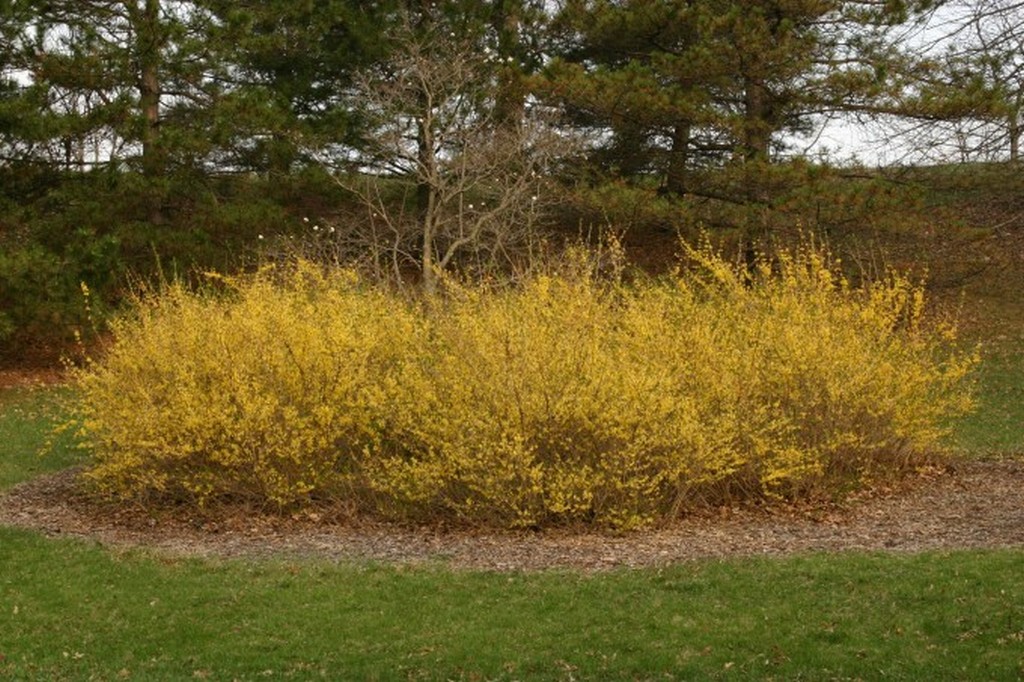
This flowering shrub's region is northwest, upper midwest, northeast and south. Mature height and width is 12 feet by 10 feet. Thrives in partial to full sun with soil ph from 4.8 to 7.6 . Has abundant yellow flowers during early spring. The multi-stem shrub is for climates that don't get below -28F . Reproduce from cuttings, also can force flowering during winter from cuttings. Foliage is green, the course medium.

Friday, August 17, 2012

Hydrangea

Ornamental shrub that provides excellent cut flowers.  Flowers during summer and fall. Large white, cone - shaped clusters change to pinkish - red from july to september. Green foliage and the texture is course. Highly adaptable to soil texture, ph 4.5 to 7.8 . This multi - stem shrub does well in climate that don't get below -25F.

Thursday, August 16, 2012

Pink Crape Myrtle

The flower of the pink myrtle last from june through august. The height of this myrtle at maturity is 10 feet tall. Grows well in zones 7 - 10, drought tolerant and mildew resistant. The oval leaves are 1 to 2 inches long. When planting , spread 4 - 5 feet apart. This deciduous flowering tree is good for bordering. It blooms best where there is full sun.

Monday, August 6, 2012

Rain Barrel

Saving money by reducing your water usage from your municipality or saving money by using less electricity if you use a well pump. Rain barrels come in handy, less dependant on well or city water. Also reduces runoff, conserve water and cost , also reducing  the load from the municipality, which 40% is used on watering lawns and washing vehicles. The water you collect is chlorine free and also free of dissolved minerals. Good for watering vegetable gardens, flower gardens and lawns.

Sunday, August 5, 2012

Aloe


Aloe stores water in it's leaves. The gel in the leaves is used to sooth burns. This plant is also known as medicinal. When planting, use loose well - draining soil. Cactus soil or general commercial potting soil with perlite. When fertilizing, use at half strength or if your using a fertilized soil, just once a year. Let soil dry out after watering from 7- 10 days. Remove shoots that grow near the base of the plant. Aloe is not a hardy plant, so move indoors during winter.

Miniature Rose

Miniature roses have small flowers, also more hardy. Works well as a edging or bordering plant. Grows from 1-3 feet tall, 2 feet wide.  For zones 5 and below, bury in a mound of soil for protection and to prevent the plant from dying back to the root. Spray with mist to prevent spider mites. Blooms from spring until the winter season. Keep soil moist , untangle roots when planting. A good hole size is 1 foot depth, 1 foot width.

Wednesday, August 1, 2012

Hibiscus


Lanceolate, ovate are the leaves. Large flowers, five or more petals that are trumpet shaped. Variety of colors, such as orange, red, pink, white, yellow and purple. A flowering shrub that blooms from late summer to mid autumn. Hibiscus grows up to 10 ft tall. Keep constantly moist, cut back errant branches. When planting, amend the soil that you  removed from the hole with compost. After halfway filling, water to settle soil and to eliminate air pockets. Hibiscus need protecting when the temperature is in the 30's. Grow in pots and cover when there's danger of frost. Feed twice during the growing season. Insecticidal soap controls pest, such as white flies, mealy bugs and aphids.