Pages

Please Feel Free For Open Discussion And Make New Friends.

>
My Zimbio

Loading crossword puzzle. One moment please.

more coupons
Free WallpaperHomeMusician.net Free MIDI Files

Thursday, February 28, 2013

Planting Tomatoes By Using Seeds and a Seed Starter Tray

Rodger Cook shows and explains how to grow tomatoes by starting them inside with seeds, seed starter tray, peat moss and perlite. How to water the seeds without washing them away or separating them from the mix. Also which side of the house near the window it should be facing after they germinate.


Tuesday, February 26, 2013

BHG LANDSCAPE PLANNING TOOL


http://www.bhg.com/gardening/design/nature-lovers/welcome-to-plan-a-garden/


Soil Selector

  1. Tell us a little bit about your lawn or garden. The more information you can provide us, the more specific our recommendation will be.
  2. ZIP Code

    30535Modify
    1. Soil Use Location

      1. Feeding

        1. Plant Type

          1. Are you looking for an organic product?

          2. Start Over
          VIEW
          • Miracle-Gro® Moisture Control® Garden Soil
          • Miracle-Gro® Expand
          • Osmocote® Planting Soil
          • Scotts® Premium Topsoil
          • Scotts® Premium Humus and Manure
          • Miracle-Gro® Garden Soil for Flowers & Vegetables
          • Miracle-Gro® Garden Soil for Roses
          • Miracle-Gro®Enriched Sphagnum Peat Moss
          • Miracle-Gro® Sphagnum Peat Moss
          • Miracle-Gro® Organic Choice® Garden Soil
          • Scotts® Garden Soil
          • Hyponex® Cow Manure and Organic Compost
          Showing 1 - 12 of 13 items.

          Sunday, February 24, 2013

          Alpine Nature & Landscape Images | NiO Photography – NiO PhotoShelter RSS Gallery Widget

          Alpine Nature & Landscape Images | NiO Photography – NiO PhotoShelter RSS Gallery Widget

          Free Business Software

          http://www.softpedia.com/progScreenshots/Lawn-Mowing-Business-Screenshot-19189.html
          Lawn Mowing Business screenshot 1 - Lawn Mowing Business will help you keep detailed records or info on an unlimited amount of customers

          Free Gardening Book


          The Gardener's Secret Handbook
          Sign Up for My FREE Gardening Newsletter
          and I'll Give You a FREE Copy of my book...
          The Gardener's
          Secret Handbook
          By signing up, I agree to the terms and conditions.

          McGroarty Enterprises Inc.
          P.O. Box 338
          Perry, Ohio 44081

          Copyright © 2013
           by McGroarty Enterprises Inc.

          Roger Cook shows the procedures of aerating the lawn.

          Roger Cook of Ask this Old House shows you how to operate an aerator, also he shows how to spread the fertilizer afterwards and the correct amount of nitrogen, phosphorus and potassium it should have. Phosphorus is crucial in promoting healthy root system of lawn grasses.

          Friday, February 22, 2013

          Zone Map, decide which grass for your zone.

          Grass Zone Table


          Lawn Grasses - Zone Table - SELECT BY NUMBERS
          GRASS KINDMAP ZONESEED RATE
          for Lawns

          @ 1000 sq. ft.
          Planting DepthWhen to PlantBest USDA*
          Zones
          Bahiagrass:
          Pensacola
          95-101/4" to 1/2"Spring / Summer7 to 11
          Bahiagrass:
          Argentine
          9-105-101/4" to 1/2"Spring / SummerLower 8 to 11
          Bentgrass1 thru 9 & 11-121/2-11/4" to 1/2"Spring or Fall
           (Fall is Best)
          4 to 6
          Bermuda9-10-11-122-31/4"March - August7 to10
          Bluegrass1-3-4-5-6-7-81-31/4" to 1/2"Feb-May
          Sept - Nov
          2 to 6
          Carpetgrass94-51/4" to 1/2"Spring / SummerCoastal 8-9
          Centipede91/4 - 11/4"Spring / Summer7 to 10
          Fescue:
          Tall & KY-31
          1-3-5-6-7-8-125-101/4" to 1/2"Spring or Fall
           (Fall is Best)
          4 to 7
          Fescue:
          Creeping Red
          1-3-4-5-6-7-83-51/4" to 1/2"Spring or Fall
           (Fall is Best)
          3 to 7
          Native-Buffalo51-21/4" to 1/2"Spring5 to 8
          Ryegrass:
          Annual
          All zones5-101/4" to 1/2"FallAll Zones(Seasonal)
          Ryegrass:
          Perennial
          2 to 8+All for overseeding1-101/4" to 1/2"Spring or Fall
           (Fall is Best)
          3-6 Per.
          7-10 Overseed
          St. Augustine9-101/2 - 11/4" to 1/2"Spring & April-August8 to 10
          Zoysia8-9-10-11-121-2 (raw seed)
          2-3 (coated)
          1/4" to 1/2"Spring & April-Augustlower 5
          to 10

          Spring Bulbs


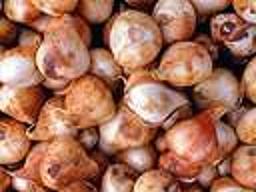
          Time for spring bulbs, a variety can really brighten up your yard with different colors.  Bulbs should be planted three times their diameter with the pointed side up. The depth of daffodils should be from six to eight inches. even during winter, you can plant bulbs as long as the soil is soft enough.. If you live in an area where winters are not freezing than early spring planting will do. The soil needs to be well drained though to prevent rotting. Bulbs prefer plenty of sunlight. Do not buy bulbs that are moldy, spongy, dry or withered. Water soluble fertilizer or bone meal will promote strong root growth while planting. After planting replace soil and water  to help settle the bulbs.

          Thursday, February 21, 2013

          Recommended Soil pH for Growing Different Fruits and Vegetables

          Recommended Soil pH for Growing Different Fruits and Vegetables

          Lime Fertilizer, Soil Test Kit

          Power of hydrogen, a concentration of hydrogen and acid thats in your soil. This can be measured by using a soil testing kit. By using lime, you can lower the acid by raising the ph level. The ideal ph level for most vegetables is 6.5 to 7.

          Item Description

          Luster Leaf's Rapitest Soil Test Kit is an innovative and inexpensive way to test a number of soil conditions using an easy capsule system and unique color comparators. The kit contains 40 tests including 10 for each pH, nitrogen, phosphorus and potassium levels. Simple, fast and accurate, and no experience is required to perform the tests. Simply mix soil with water then pour the water off, dissolve a test capsule and compare the color to the included chart. The chart includes pH and NPK levels for more than 100 plants and complete instructions are also included for adjusting soil conditions and fertilization.

          Luster Leaf Rapitest Soil Test Kit, 40 Tests:
          • Innovative and inexpensive soil test kit features an easy-to-use capsule system and color comparators
          • Contains tests for ph, nitrogen, phosphorus and potassium levels with 40 tests in total
          • Also has a chart of pH and NPK levels for more than 100 plants
          • Simple, fast, and accurate results: no experience required to perform tests
          • Includes complete instructions for adjusting soil conditions

          Specifications

          Battery Type:Does Not Contain a Battery
          Multi Pack Indicator:No
          Model No.:1601
          Shipping Weight (in pounds):1.0
          Product in Inches (L x W x H):2.0 x 10.0 x 9.0

          Product Warranty and Service Plan Options

          Testing Soil?

          Why should I test my soil?
          • To know how much lime and fertilizer your soil needs for best growth of your lawn, garden, landscape, wildlife food plot, or other plants.
          • Prevent from applying too much or not enough.
            1. Too much wastes your money and can damage the environment by running off into water.
            2. Not enough can result in poor growth and leave soils bare to erode.

          Where do I get sample containers, submission forms, and instructions for submitting my soil samples?
          • Sample containers, submission forms, and instructions are also available from your local UGA-Cooperative Extension Office.
            1. To find the nearest office, enter your zip code here:    
            2. You may also call 1-800-ASK-UGA-1 to contact your local Extension Office.
          Learn more about:
          Soil Testing Labs in Georgia:

          Vegetable Garden Calendar | CAES Publications | UGA

          Vegetable Garden Calendar | CAES Publications | UGA

          How to use a Burpee Seed Starter Kit

          Growing from seed gives you a more extensive selection of plants to grow. If you are a beginner, choose the seeds of annual plants because their seeds germinate quickly and they tend to grow easily. Check the seed packet for the time the seeds take to germinate and the time they take to become ready for transplantation to the garden. Time your sowing date so that you can transplant the seedlings after the last frost date in your area. Burpee manufactures grow kits that include the supplies you need to start your own seeds. Does this Spark an idea?

          Things You'll Need

          • Water
          • Seeds
          How to Use a Burpee Seed Starter Kit thumbnail

          Instructions

            • 1
              Lay the self-watering mat on the watering tray. Fill the reservoir with water. The self-watering mat will absorb moisture from the reservoir, providing a steady water supply for the seeds.
            • 2
              Place the 72-cell plant tray on the self-watering mat in the watering tray.
            • 3
              Place one Burpee Super Growing Cube in each cell where you want to grow the seeds. Add water and leave the Burpee Super Growing Cubes for a few minutes to let them fill the cell.
            • 4
              Sow the seeds in the Burpee Super Growing Cubes, following the directions on the seed packet. Generally, you can place the seed at a depth of two to three times the seed's diameter.
            • 5
              Write the plant name and variety on the labels. Also write the date of sowing. Paste the labels on the corresponding containers.
            • 6
              Cover the tray with the greenhouse top.
            • 7
              Place the tray on a refrigerator or a dryer. Otherwise, place it a few inches above a radiator or lay a heating mat under the tray. When germinating, seeds need warmth.
            • 8
              Place the tray where it will get temperatures of 60 to 70 degrees Fahrenheit once the seedlings reach a height of 1/2 inch. Provide the seedlings with light by placing them in a sun room, by a windowsill, or under fluorescent or full-spectrum light for 12 to 16 hours per day. If using a light, hang it 3 to 4 inches above the seedlings using open-link chains with S-hooks.
            • 9
              Add half-strength liquid fertilizer such as fish emulsion to the watering tray every week if the plants have two sets of true leaves.
          Sponsored Links

          Tips & Warnings


          Read more: How to Use a Burpee Seed Starter Kit | eHow.com http://www.ehow.com/how_7424166_use-burpee-seed-starter-kit.html#ixzz2LYWQXSof